Reprinted from The Packet, November 8, 2018
by Lester Green
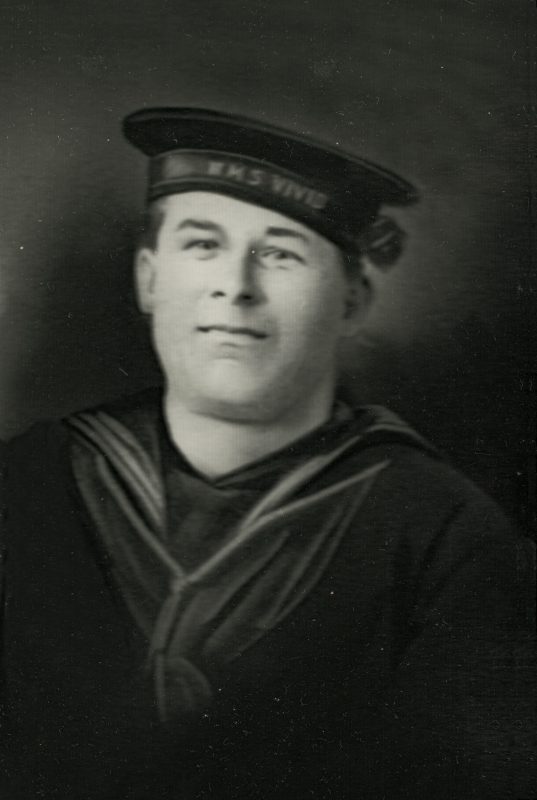
Able Seaman Leander Green. Courtesy of his son Melvin Green
For daily inspiration, we all need heroes. During the dark days of the Great War, who would be Newfoundland’s hero? Seaman Leander Green stood on the bow of the HMS Hillary and plunged into the North Atlantic slicing its cold waters bringing pride to the sailors of the Newfoundland Royal Naval Reserve and people back home.
Born to Mark and Caroline (Dodge) Green on April 20, 1891, Leander would be one of six siblings to be raised in the tiny fishing town of St. Jones Without. The picturesque community can be best described as a well protected, three-mile fiord that offered shelter to boats of various sizes. Leander grew up in a fishing family and along with his brother, Adam, were soon sailing the waters of Trinity Bay and the shores of Newfoundland.
Leander would etch out a meager living pursuing the cod fishery and seals in the spring.
In the March 1912, Leander and his friend Edward John Green journeyed to St. John’s searching for a berth to the seal hunt at the Front. Baine Johnson offered them temporary lodging and a berth to the Gulf but unfortunately Baine Johnson’s ship never arrived from Canada.
Rather than returning home, both men joined the Newfoundland Royal Naval Reserve as a means of obtaining a spring’s income.
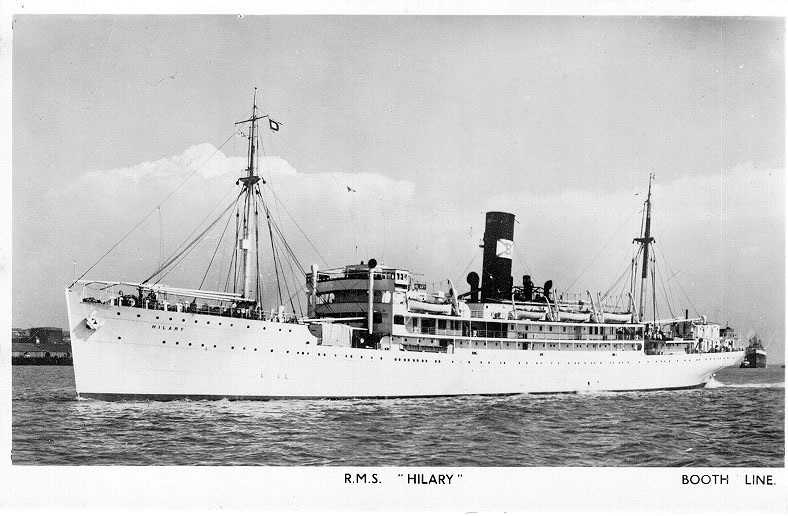
HMS Hilary
Leander and Edward John both signed their application to enlist on March 15, 1912. They spent the next 28 days training aboard the HMS Calypso and their competency in handling/discharging guns was listed as very good. They both followed this service with another two years training before the war was declared.
On August 2, 1914, the British Admiralty summoned all reservists to the HMS Calypso for active service. By orders received through Royal Proclamation, Leander and Edward John reported to St. John’s. They immediately began preparing for war overseas. In the early hours of November 6, the SS Franconia carrying 305 sailors slipped past the narrows with very little fanfare. Among them were 33 of our boys from the Southwest Arm area, including Leander and Edward John.
Upon their arrival they were assigned to HMS Vivid I, a shore-based training facility at Devonport, England. A few weeks later, they both received orders to report to the HMS Hiliary.
It was on the New Years Eve, 1914 that St. Jones Without’s son became a Great War hero. Not that Seaman Leander Green wanted to be heroic but because he knew that lives were in peril and if nobody stepped forward, lives would be lost to the frigid, cold Atlantic.
Twenty-five days after joining the Hiliary, his ship was asked to assist a Norwegian freighter, SS Maryetta, that was taken on water.
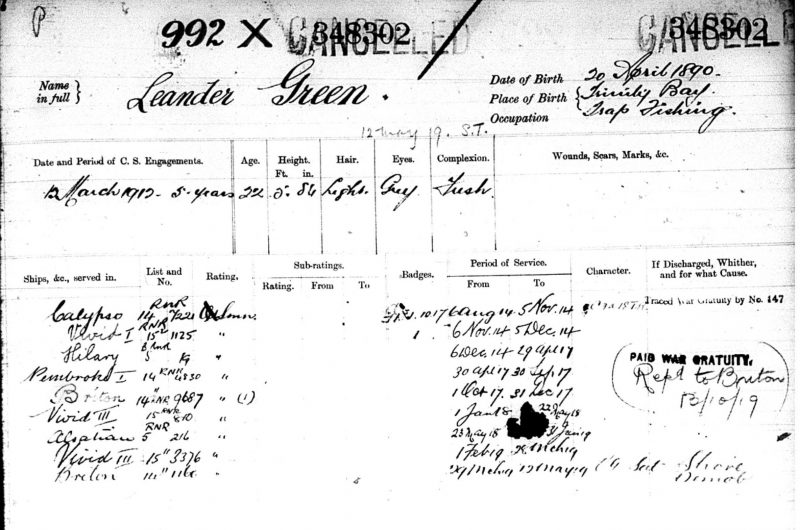
Newfoundland Royal Naval Reserve Ships Ledger. Source TRPAD_ GN 182.3
According to some reports, the ship was struck by a torpedo from a German U-boat and the HMS Hiliary took the wounded vessel undertow. Other accounts suggest that the Hiliary released the Maryetta and gave chase to the submarine and ran it down, while others suggest the U-boat escaped.
When the HMS Hiliary returned to the freighter, it had sprung a serious leak and men were already in a sinking lifeboat. In order for the men to be saved, the Captain asked for a volunteer to jump into the frigid waters and swim carrying a lifeline to the men of the ill-fated lifeboat.
Able Seaman Green mustered up the courage, stepped forward and volunteered. He stood on the railings peering down into the cold Atlantic waters with the end of the rope tied around his waist. He plunged into the icy cold waters of the North Atlantic and swam to the lifeboat that was hopelessly tossing on the waves.
The rope was secured and crewmembers of the Maryetta were transferred to the Hiliary. His act of heroism saved six men that night but unfortunately six sailors from the Maryetta and two from the HMS Hiliary were lost to the sea. Today, there are living descendents of these men that owe multitude of gratitude to Able Seaman Green for his unselfish act of bravery on that cold January night.
His son, Everett, recalls that in his father’s later years, he would say, “I looked over the side and thought, what the hell am I doing out here.”
Several articles appeared in the Evening Telegram, the Newfoundland Quarterly and the Cadet during 1915 that spoke of his heroism and inspiration to his fellow sailors.
On August 13, 1915, the Evening Telegram carried an article about this event entitled Congratulations to the Winner of Distinguished Service Medal.
Interestingly, Leander had written a letter to his sister, Rachael, after this event in which he stated, “I had a good trip this time. The King gave me a medal.” These two sentences give us true insight into his modest character.
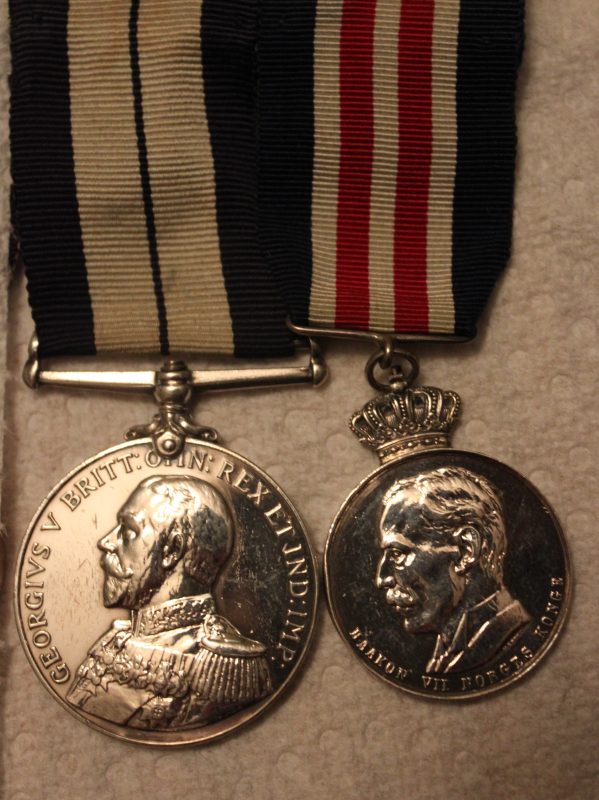
Distinguished Medals awarded to Able Seaman Leander Green. Courtesy of his son Everett Green.
Able Seaman Leander Green had the distinction of becoming the first decorated Newfoundlander from either armed forces during the First World War. He also received a medal from the King of Norway for saving the lives of the Norwegian sailors. Inscribed on the reverse side were the Norwegian words “Adel Daad” which translate into English as a “noble deed.”
Seaman Edward John Green must have been bursting with pride as he witnessed his buddy carrying out this heroic deed.
The community of St. Jones Without could forever speak proudly of their two sons and the roles they played during that dreadful event.
Seaman Edward John’s encounter with his near-death experience was yet to come onboard the HMS Laurentic during its tragic sinking in 1917. He was to perform his heroic in comforting men in a sinking lifeboat.
Leander was tragically killed on August 30, 1966 in a car accident near Sunnyside, along with several of his family members. He is buried at Sunnyside.
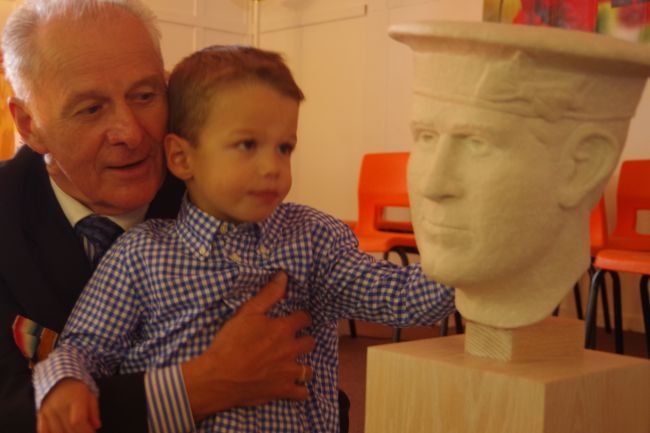
Bust of Able Seaman Leander Green. Photo credit The Packet
On September 11, 2016 Able Seaman Leander Green was honored at a Sunnyside ceremony. A bust by sculptor Christen Corbet was unveiled and is now on display at town hall at Sunnyside. Another bust was unveiled at the Canadian War Museum, Ottawa on April 26, 2016 to honour his act of heroism in risking his life so that others may live.