Reprinted from The Packet, August 10, 2016
by Lester Green
Family fortunes suffered after Wilson Vey went to war

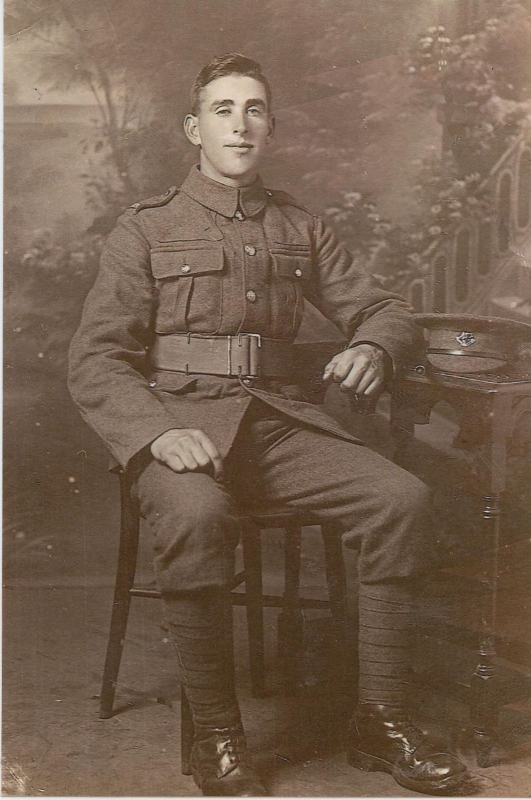
Pte Wilson Vey in Royal Newfoundland Regiment uniform (Courtesy of Lori Kelly)
Wilson Vey was born at Long Beach, Southwest Arm, on September 19, 1899, to William and Sarah (Puddister) Vey.
He had eight siblings – six sisters and two brothers. His family was involved with the schooner fishery and he assisted the family in procurement of the cod fishery during the summer season.
Wilson travelled to St. John’s and enlisted in the Royal Newfoundland Regiment on May 22, 1918. His attestation papers list his age as 19 years and trade as being a fishermen.
He was assigned the regimental number of 5320 and for the next two months completed basic training at St. John’s.
On June 12, he completed allotment papers and requested that 50 cents be deducted from his pay, payable to his mother, Mrs. William Vey of Long Beach.
He left St. John’s on July 22, 1918, as part of the last major draft (number 56) which boarded the troop ship S.S. Columbella to travel to Halifax where they joined a convoy of ships.
The flotilla was carrying supplies across the Atlantic and re-enforcement troops to strength the Allied forces.
The ship arrived Halifax on July 24 and departed on July 27, arriving at Tillbury Docks, Folkerstone, on Aug. 8.
There were five other soldiers from the Southwest Arm region onboard the ship: Pte William John Peddle and Pte Arthur Jacobs from Little Heart’s Ease; Pte Bartlett Green of St. Jones Without; Pte John Baker of Hodge’s Cove; Pte Abel Churchill of Hillview.
The war effort overseas required young men to leave the outports of Newfoundland, often resulting in financial difficulty for their family.
Between Aug. 16-29, letters were written by his mother seeking financial support under a program called Separation Allowance. This support was given to families suffering financial hardships due to their sons’ involvement in the war overseas.
In the application his mother explains the appalling situation that the family is facing.
The income from the fishery was a failure, due to her husband’s health, and with her son overseas the family had very little income.
After his arrival in England, he continued his training at Hazeley Down Camps and awaited orders. However, before he received his orders to join the 1st Battalion, an Armistice was signed with Germany. The war was declared as being over.
Unlike other members from the Southwest Arm region, he was not called to active duty but held in reserve with the 2nd Battalion at Hazeley Down Camps.
On April 13, 1919, a medical report was completed by Private Vey at Hazeley Down for his proceeding on demobilization. The report states that he complains of no disability.
On June 24, Private Vey prepared for his departure on the SS Cassandra and sailed from Glasgow with the final draft of soldiers that were in Europe.
The SS Cassandra arrived in the port of St. John’s on July 1, the day the city was celebrating Commemoration Day.
According to an article in the Evening Telegram, the city of St. John’s was erecting a pyramid shaped shrine with a white painted cross at Bannerman Park to pay tribute to Newfoundland’s heroic dead.
The Daily News reported the headlines “Final draft arrives on S.S. Cassandra while Evening telegram carried the headline “Last draft arrives”.
On July 12, demobilization of Private Wilson Vey began. He was given a $60 clothing allowance and a travelling warrant to his home at Random on July 14.
His discharge was approved on July 28. He was eligible for War Service Gratuity for his overseas service. He had served his King and Country for a total service of one year and 82 days.
At home in Long Beach, Random, on Aug. 14, he received his Discharge Certificate #3740. Four days later he received his first War Gratuity payment of $70.
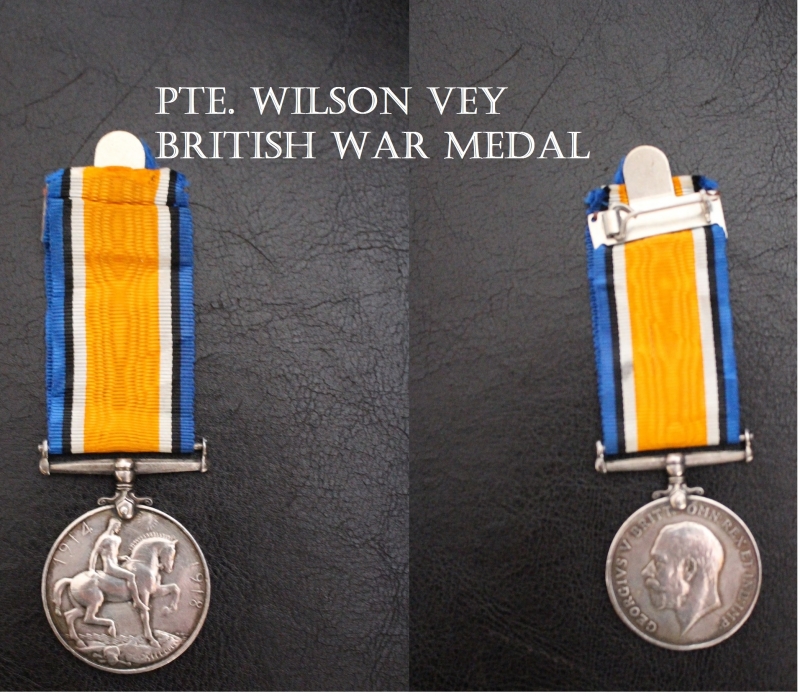
On Oct. 20, 1921, he was awarded the British War Medal for his service overseas.
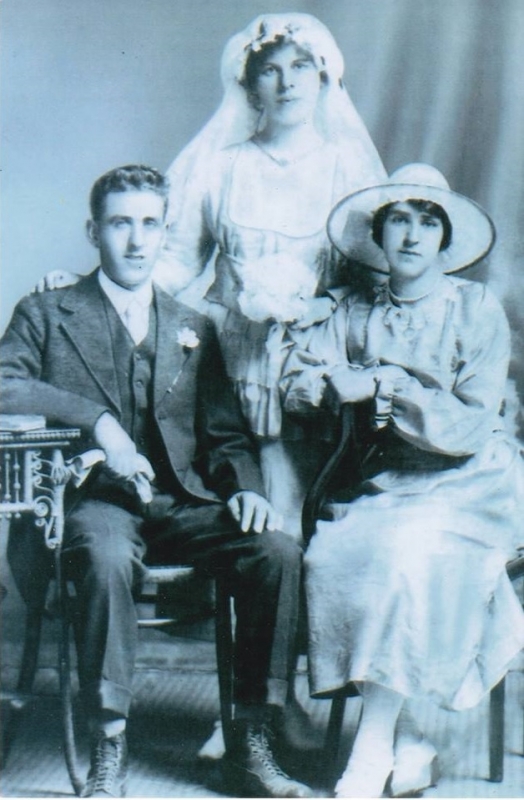
Private Wilson Vey returned to Long Beach and was married on July 14, 1921, to Heneritta, daughter of George and Louisa (Butler) Parsons of Greenspond. She was a teacher at Long Beach during this time period. They had a family of 10 children: six sons and four daughters.
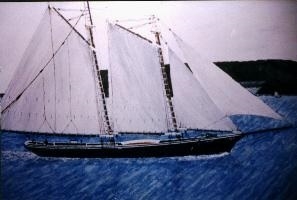
One of the epic tales often told about Captain Wilson Vey was of the ill-fated schooner Edward VII. The schooner went adrift on Nov. 25, 1933, off Baccalieu. She had run into a storm and lost her mainsail when the crew decided to take shelter under Baccalieu Tickle.
The vessel drifted for nine days before being picked up off the coast of North Carolina by a Danish steamer. They were brought ashore to North Carolina and made their way to New York by train.
From there, they took passage on the S.S Rosalind and arrived in the port of St. John’s on Dec. 22. Their ordeal had lasted 27 days.
A number of family members had given up hope that any of the crew would have been found alive. The small village, along with other communities in Random, celebrated when the crew finally arrive at Long Beach.
Wilson Vey passed away on May 5, 1995, at the age of 97. He is buried next to his wife, Heneritta, at St. Mark’s (Old) Anglican Cemetery at Long Beach.

RNR Service Record for #5320 Pte.Wilson Vey
May 22, 1918 Signed enlistment papers at St. John’s.
June 12, 1918 Allotment of 50 cents deducted and made payable to Mrs. William Vey, Long Beach.
July 22, 1918 Embarked St. John’s aboard SS Columbella for Halifax and onward to Tillbury Docks, England
Aug. 16, 1918 Family completed application for Separation Allowance.
Aug. 29, 1918 Letter from Clergy.
April 3, 1919 Completion of Medical Report on a soldier before discharge at Hazeley Downs Camp.
June 24, 1919 Embarked SS Cassandra at Glasgow, England for St. John’s.
July 1, 1919 Arrived Newfoundland aboard the SS Cassandra.
July 8, 1919 Completed Descriptive Return of a Soldier form.
July 12, 1919 Processed for Demobilization Form 1.
July 12, 1919 Medical History form completed.
July 14, 1919 Demobilization Form 2.
July 14, 1919 Met with Civil Re-establishment Committee.
July 14, 1919 Proceedings of Discharge from Royal Newfoundland Regiment.
July 14, 1919 Completed War Service Gratuity application.
July 28, 1919 Approved for Discharge by O.C. Discharge Depot.
Aug. 9, 1919 Demobilization Confirmed by Officer i/c Records.
Aug. 14, 1919 Issued Discharge Certificate #3740 from Paymaster.
Aug. 18, 1919 Received first payment $70 of War Gratuity.
Oct. 20, 1921 Received British War Medal.
Total Service one year and 82 days.